
private mansions Marais — private mansions Marais : this expression alone sums up an exceptional architectural heritage, a true jewel of the French capital. Strolling through the cobblestone streets of this historic district is like traveling back in time and discovering majestic façades that have endured through the centuries. Between 17th-century aristocratic residences and Renaissance mansions turned into museums, the Marais concentrates an architectural density unique in the world.
A district shaped by the French nobility
From the 16th century, the Parisian nobility abandoned the Île de la Cité to settle in this drained marsh that would become the Marais. Prominent families built sumptuous private mansions there, competing in elegance and refinement to assert their social status. This architectural effervescence reached its peak under Henry IV, notably with the creation of the Place Royale, today Place des Vosges, surrounded by harmonious pavilions that became the model of the genre.
To understand the evolution of this district over the centuries, the A short history of the Marais and its private mansions provides a fascinating insight into the social and architectural changes that shaped this emblematic Paris neighborhood.
The Hôtel de Sully, jewel of Louis XIII architecture
Located on Rue Saint-Antoine, the Hôtel de Sully is one of the most accomplished examples of early 17th-century Parisian architecture. Built between 1625 and 1630, this private mansion was acquired by Maximilien de Béthune, Duke of Sully and minister to Henry IV, who gave it its current name. Its façade, richly decorated with allegorical sculptures representing the elements and the seasons, bears witness to the refinement of the era.
The interior does not disappoint visitors, with its paved courtyards, French-style garden and orangery that give a sense of the scale of the estate once held by great noble families. Today the headquarters of the Centre des Monuments Nationaux, the Hôtel de Sully regularly hosts temporary exhibitions that highlight this exceptional heritage.
The Hôtel Carnavalet, the living memory of Paris
It is impossible to speak of the town houses of the Marais without mentioning the Hôtel Carnavalet, a true setting dedicated to the history of Paris since 1880. This Renaissance residence, altered by François Mansart in the 17th century, now houses the Carnavalet Museum, completely renovated and reopened to the public after several years of work. The permanent collections trace the evolution of the capital from its origins to the present day.
The building's architecture itself is worth the detour, with its ceremonial courtyard adorned with bas-reliefs attributed to Jean Goujon and its richly decorated salons that have retained their old-world charm. The inner gardens also offer a haven of peace in the heart of Paris's bustle.
The Hôtel de Soubise and the National Archives
The Hôtel de Soubise is one of the most spectacular examples of the rocaille style in France. Rebuilt at the beginning of the 18th century by the architect Pierre-Alexis Delamair for the Prince de Soubise, this private mansion now houses part of the National Archives and offers fascinating temporary exhibitions on the history of France.
The ceremonial courtyard, framed by a double colonnade, impresses by its monumentality while the interior apartments, notably the princess's oval salon, are masterpieces of the French rococo style. The painted decorations by Boucher and Van Loo add an additional artistic dimension to the visit of this place steeped in history.
Discover our apartments in the historic heart of Paris
The Hôtel Salé, home of the Picasso Museum
Built between 1656 and 1659 for Pierre Aubert de Fontenay, a tax farmer of the salt duties (hence its nickname Hôtel Salé, in reference to the salt tax), this building is a remarkable example of French classical architecture. Since 1985 it has housed the Musée national Picasso-Paris, whose collections allow admiration of the Spanish painter's complete works in an exceptional architectural setting.
The grand ceremonial staircase, adorned with allegorical sculptures, and the salons with harmonious proportions create a subtle dialogue between contemporary art and classical architecture, making this visit a complete cultural experience.
Other lesser-known gems to explore
The Marais still contains many other private mansions worth visiting, even if they are sometimes less known to the general public. The Hôtel de Guénégaud, home to the Hunting and Nature Museum, charms with its elegant architecture and original collections. The Hôtel d’Aumont, with its restrained and elegant façade, perfectly illustrates 17th-century French classicism.
To discover all of these architectural treasures and plan your visit route, the Private mansions of the Marais district offer a comprehensive and detailed guide that will ensure you miss nothing during your exploration of the neighborhood.
Architectural secrets not to be missed
Beyond the façades visible from the street, many private mansions in the Marais hide architectural treasures in their inner courtyards and secret gardens. These spaces, often invisible from the outside, reveal the full sophistication of French aristocratic architecture. Grand staircases, French-style ceilings, and carved decorations are among the details that deserve particular attention during your visits.
To truly unlock the mysteries of these historic residences, discovering The secrets of the most beautiful private mansions of the Marais in Paris will allow you to approach these places with fresh eyes, understanding the social and aesthetic issues that guided their construction.
Le Marais aujourd’hui : entre patrimoine et modernité
Unlike other Parisian neighborhoods that underwent the major Haussmann renovations of the 19th century, Le Marais has preserved its medieval urban fabric and its 16th- and 17th-century architecture almost intact. This historical peculiarity explains the exceptional heritage richness that can still be admired today, making the district a true open-air museum.
This remarkable preservation is partly explained by the neighborhood's decline in the 18th and 19th centuries, when the aristocracy deserted Le Marais to settle in newer, more modern districts. Paradoxically, this relative abandonment helped safeguard an architectural heritage that could have vanished under the picks of Haussmann's demolishers.
To deepen your knowledge of this exceptional heritage and discover all the neighborhood's architectural treasures, the Hôtels particuliers du Marais are a valuable resource for organizing your visits and understanding the history of each building.
Les Journées du Patrimoine, un moment privilégié
Each year, the European Heritage Days offer the unique opportunity to discover the interiors of certain hôtels particuliers that are usually closed to the public, notably those belonging to institutions or embassies. These exceptional days allow access to places steeped in history, often invisible the rest of the year, and to understand the evolution of Parisian architecture through the centuries.
To best prepare for this unique experience and discover the full program, the article on Les plus beaux hôtels particuliers de Paris – Journées du Patrimoine 2025 will guide you to the most remarkable buildings not to be missed this year.
Stay in the heart of this exceptional heritage
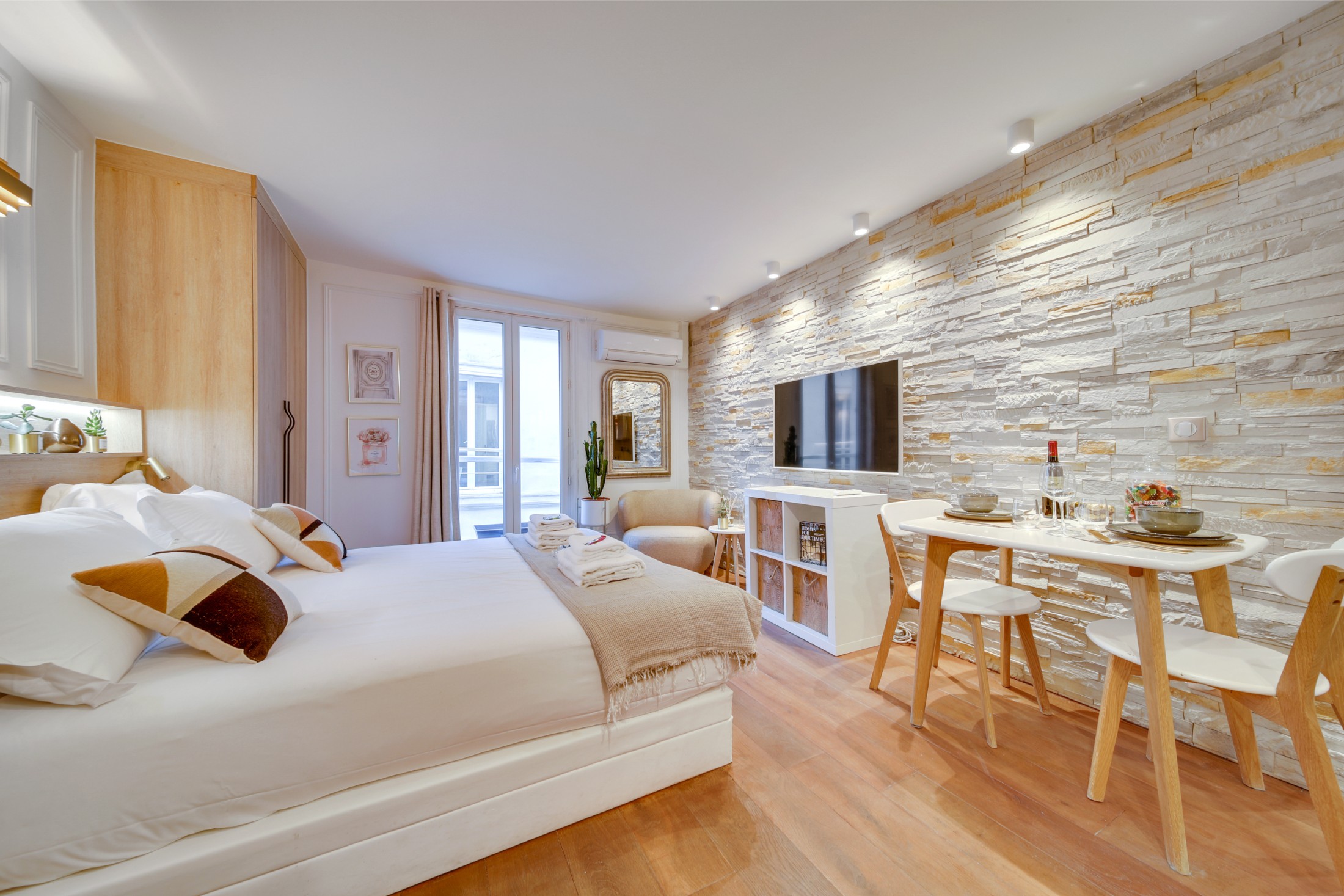
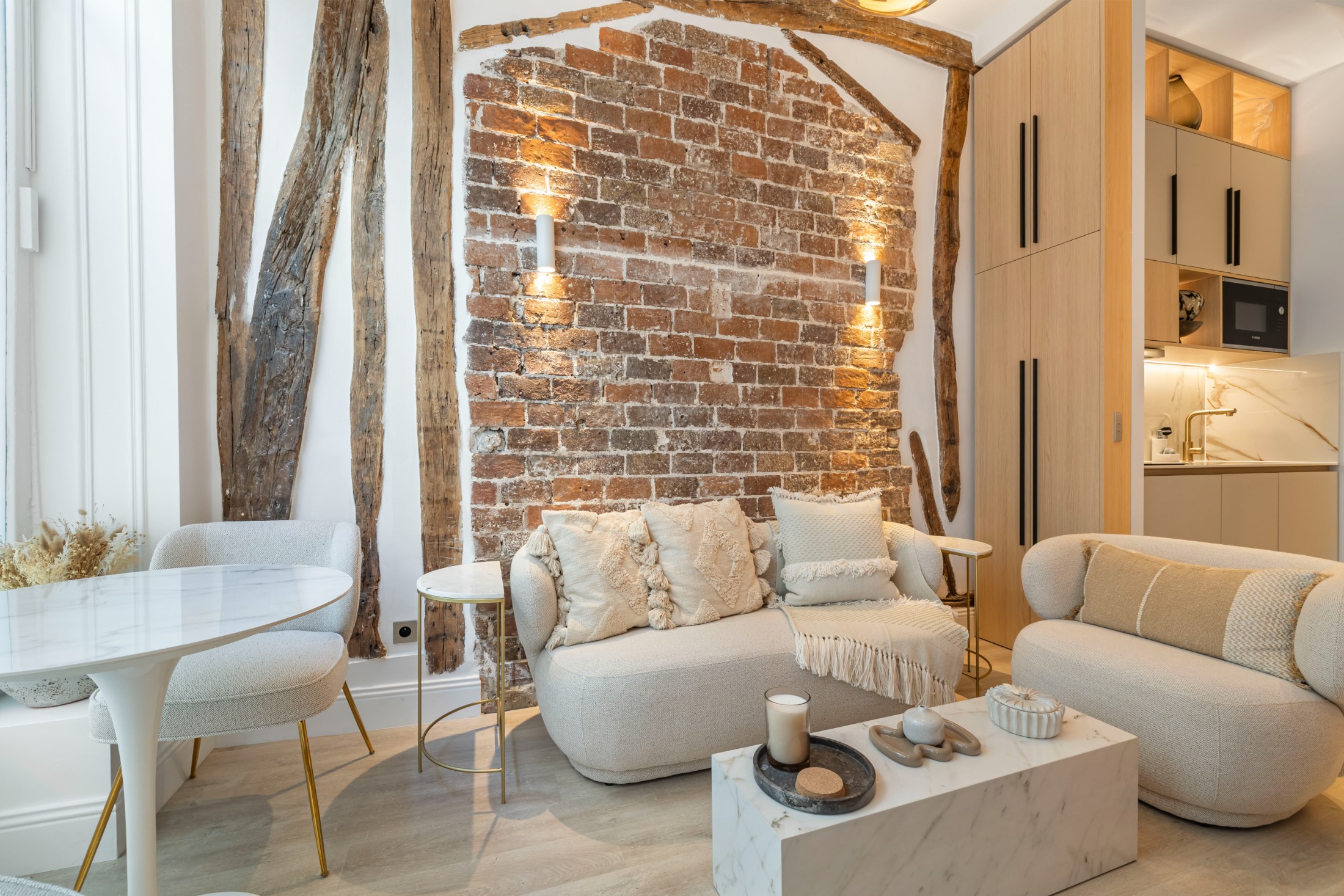
Nothing beats the experience of staying directly in this historic neighborhood to fully soak up its unique atmosphere. The Marais today offers quality accommodation options that combine modern comfort with an exceptional architectural setting, just steps from the neighborhood’s finest hôtels particuliers.
For an exceptional stay in this unique setting, Discover our apartments in the historic heart of Paris and enjoy a privileged location to explore on foot all of the Marais’s architectural treasures.
Explore the neighboring districts
The Marais is mainly spread across Paris’s 3rd and 4th arrondissements, offering a variety of discoveries that go far beyond the hôtels particuliers alone. Architecture and history enthusiasts can round out their visit by exploring the shopping streets, contemporary art galleries, and hidden courtyards that give this lively neighborhood its charm.
To best organize your exploration of this fascinating area, the article A first day in the 3rd arrondissement of Paris offers a complete itinerary so you don’t miss the local riches.
If you plan to extend your Parisian stay beyond the Marais, know that Paris is also full of other equally fascinating historic districts. The Palais-Royal, with its gardens and shopping arcades, is an essential stop for any lover of French architecture and history, as detailed in the article One address: the Palais Royal.
Discover our apartments in the historic heart of Paris
The covered Parisian passages also deserve special attention, particularly those located in the neighboring districts. The architecture of the Passage Choiseul reveals treasures of glass roofs and decorations that testify to another era of Parisian urban planning, while the discovery of the Passage Sainte-Anne and the Japanese quarter offers a striking contrast between historic heritage and cultural modernity.
An investment for a memorable stay
Choosing to stay in a high-end apartment in the heart of the Marais is much more than a simple practical choice: it’s the opportunity to live to the rhythm of this historic neighborhood, to encounter the façades of townhouses around every corner and to enjoy an authentic Parisian experience. The discreet luxury of these upscale accommodations fits perfectly with the timeless elegance of the surrounding architectural heritage.
To understand all the advantages of such a lodging choice, the article Why choose a luxury apartment in central Paris for an exceptional stay details the multiple benefits of this unique experience, between modern comfort and immersion in Parisian history.
Ultimately, the townhouses of the Marais constitute an exceptional heritage that deserves to be explored with care and curiosity. Each façade, each inner courtyard tells a different story, that of the great families who shaped Paris over the centuries. Whether you are passionate about architecture, history, or simply in search of beauty, the Marais will seduce you with the richness and diversity of its heritage unique in the world.