Paris’s Square du Temple is one of those gardens where time seems to stand still, just steps from the bustle of the Marais and its shopping streets. Nestled in the 3rd arrondissement, this green oasis offers walkers a precious respite, with its pond, bandstand, and majestic century-old trees. For travelers staying in a charming apartment in Paris, such as those offered by Paris Luxury Stay at Passage Choiseul, taking such a break during a stroll through the Marais is almost a ritual.
Far from being merely a green space to pass through, Square du Temple has a true identity, shaped by nearly two centuries of Parisian history. Understanding its origins and uses makes it easy to incorporate into a day spent discovering the Marais, before returning at the end of the outing to the comfort of a pied-à-terre designed to extend the Parisian experience.
A garden born in the 19th century, a witness to Paris’s transformations
Square du Temple – Elie-Wiesel came into being in 1857, at a time when Paris was reinventing itself under the impetus of Haussmann’s major works. Like many squares created during this period, it reflected a new desire to offer city dwellers breathing spaces, conceived as small green lungs in the heart of the densely built-up city. The site, located on the grounds of the former Temple enclosure, carries the memory of a place that had experienced several lives before becoming this peaceful garden.
This historical dimension explains the square’s very structure: its characteristic 19th-century landscape design, with winding paths, gently undulating terrain, and a central pond reflecting the English garden style then in vogue in Parisian landscaping.
A distinctive atmosphere, between tranquility and neighborhood life
What strikes you upon entering Square du Temple is the immediate contrast with the bustle of the surrounding streets. The sounds of the city fade away, replaced by birdsong and the rustling of leaves. The garden welcomes both local residents who come to read on a bench and families enjoying the play areas, as well as visitors passing through in search of a moment of calm.
This mix of uses gives the place a lively yet never noisy atmosphere, reflecting the spirit of the Marais itself: a neighborhood where heritage and everyday life coexist elegantly. The square functions as a true open-air living room, visited as much for the beauty of its setting as for the gentle pace that settles there.
The Marais’s architectural heritage, the square’s natural setting
Square du Temple lies within an exceptionally rich urban environment. As the page devoted to the Parisian Marais, this historic district extends across a large part of the 3rd and 4th arrondissements, without a precise administrative boundary, but with an extremely distinctive architectural and cultural identity. Private mansions, historic façades, and cobblestone lanes make up a unique urban fabric in Paris.
The garden fully benefits from this setting: by looking up beyond the vegetation, you can see the neighborhood’s typical rooftops and façades, creating a constant dialogue between the landscaped nature of the square and the built heritage surrounding it. This immediate proximity between a carefully maintained green space and a preserved architectural ensemble makes the site a particularly photogenic stop for anyone exploring the Marais on foot.
What to do at Square du Temple during a visit
Making the most of Square du Temple requires neither complex planning nor any particular constraints: above all, it is a place to savor at the pace of a leisurely stroll. Here are a few simple ways to get the most out of it:
- Walk slowly along the paths to observe the diversity of tree species and the garden’s landscaping.
- Sit on a bench facing the pond, an ideal moment to read, write, or simply watch life in the square.
- Take a break in the morning, when the light gently filters through the foliage and visitor numbers remain moderate.
- Combine the visit with a stroll through the adjacent streets of the Marais, alternating between nature and architectural discovery.
- Observe the bandstand, a characteristic feature of 19th-century Parisian gardens, which still punctuates the central area of the square today.
The best time to discover the square
Like many Parisian gardens, Square du Temple changes its appearance depending on the time of day and the season. In spring, the vegetation regains its colors and the garden comes alive with families and walkers enjoying the first mild days. In summer, the shade of the tall trees makes it a welcome refuge from the Parisian heat. Autumn adorns the square with particularly photogenic golden hues, while winter offers a quieter atmosphere, conducive to a contemplative break.
For those wishing to avoid the crowds, choosing early mornings or weekdays generally makes it possible to enjoy a more peaceful atmosphere, in keeping with what travelers seeking Parisian authenticity are looking for.
A charming base for exploring the Marais at your own pace
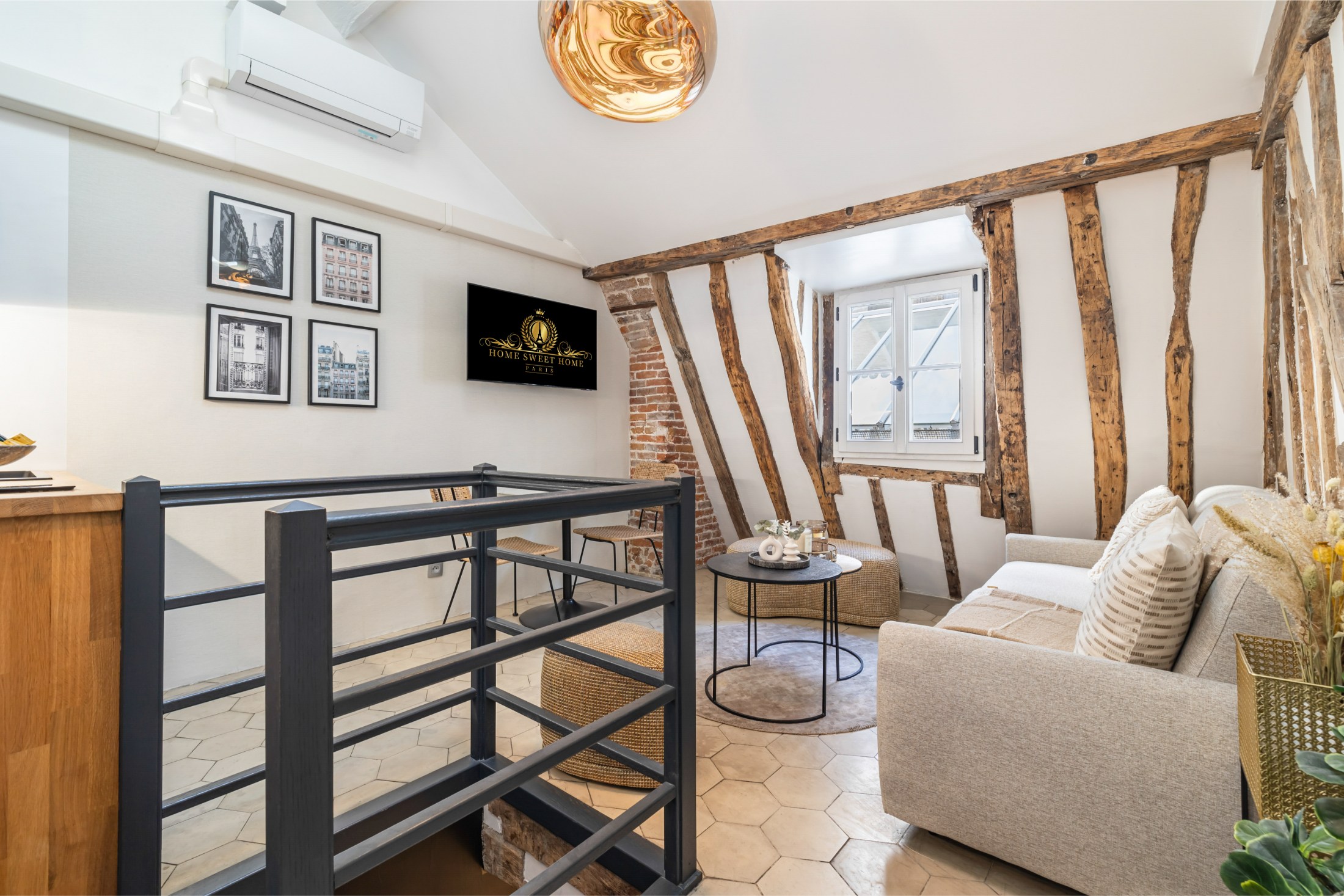
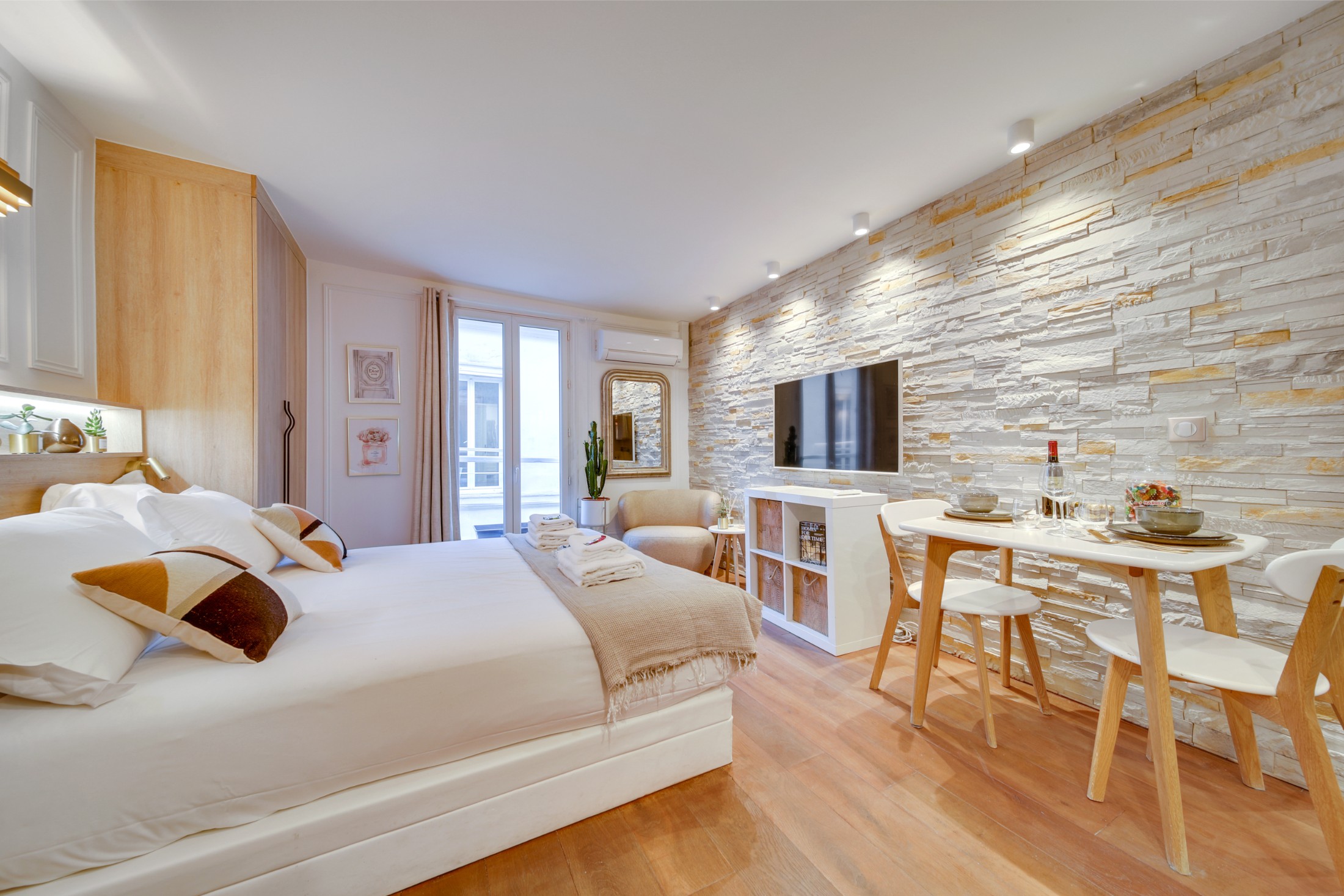
Discovering a place like Square du Temple is all the more enjoyable when you have a comfortable base for the rest of your stay. This is precisely what Paris Luxury Stay offers at Passage Choiseul: eight luxury furnished apartments, where listed heritage and contemporary design complement each other, along with hotel services designed to make travelers’ daily lives easier.
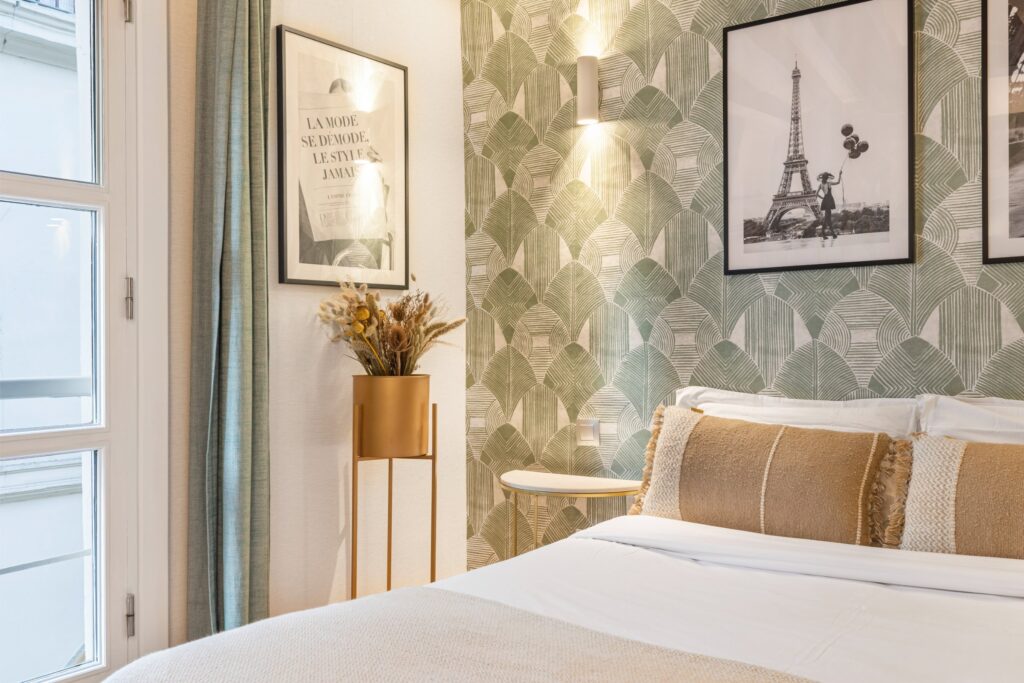
Stays can be arranged for either short or long durations, according to each person’s pace, and include tailor-made concierge services: reservations, personalized suggestions, and private transfers are handled by a dedicated team available throughout the stay. From this address near Place Vendôme, the major galleries, restaurants, and boutiques can be reached on foot, providing a convenient base from which to explore other districts of the capital, including the Marais and its Square du Temple, along the way.
To refine your choice of accommodation suited to this type of urban exploration, our article on choosing a luxury apartment in Paris provides useful guidance.
Square du Temple, a stop on the discovery of the 3rd arrondissement
Beyond its intrinsic value, Square du Temple naturally fits into a broader exploration of the neighborhood. The surrounding narrow streets are filled with independent shops, artisan workshops, and historic façades that also tell the story of the Marais. To organize a coherent exploration of this area, it may be useful to consult our article on discovering the third arrondissement in one day, which offers an itinerary that complements a visit to the square.
The square then serves as a breath of fresh air along this urban journey: a stop where one slows down before continuing to discover the neighborhood’s shopping streets and iconic sites, and then returning, at the end of the day, to the calm of a well-located apartment.
Pairing Square du Temple with a leisurely stay
The true richness of a place like Square du Temple reveals itself when one takes the time to appreciate it, far from the logic of the hurried visitor. Incorporating this pause into a broader itinerary, without trying to see everything in a single day, allows one to fully savor the atmosphere of the Marais. It is also the benefit of being able to rely, during one’s stay, on a dedicated team capable of adjusting reservations and transportation according to one’s wishes, rather than being subject to a fixed schedule.
Our article on how to organize a high-end weekend in Paris without rushing details this approach, which prioritizes the quality of the moments experienced over the accumulation of visits. Square du Temple perfectly illustrates this philosophy: a place that one does not so much «visit» as feel, over the course of a leisurely pause, a carefully chosen bench, or a stroll without a specific destination.
Mistakes to avoid when discovering Square du Temple
Certain habits can detract from fully appreciating the place. A few points to keep in mind can help you enjoy it to the fullest:
- Do not stop there for just a few minutes: the square’s charm is best savored over time, not in a rush.
- Avoid peak hours if tranquility is your main priority.
- Do not overlook the surroundings of the square, whose architecture is an integral part of the experience.
- Consider combining your visit with a longer walk through the Marais, to place the site in the context of the neighborhood’s history.
Frequently asked questions
Where exactly is Square du Temple located in Paris?
Square du Temple is located in Paris’s 3rd arrondissement, in the heart of the historic Marais district. It occupies the site of the former Temple enclosure, whose memory it indirectly preserves in its name.
What is the history of Square du Temple?
This Parisian garden was created in 1857, amid the major urban transformations of the 19th century. It is one of the squares designed to provide Parisians with breathing spaces in a city undergoing profound change.
Is Square du Temple suitable for a family visit?
Yes, the garden welcomes both walkers seeking peace and families enjoying the play areas. Its peaceful atmosphere and moderate size make it a pleasant stop for both adults and children.
Can the visit to the Square du Temple be combined with discovering the Marais?
Absolutely, the square naturally fits into an exploration of the Marais, whose surrounding streets are filled with boutiques, workshops, and historic buildings. It provides a welcome break between two stops on a walk through the neighborhood.
What is the best time to visit Square du Temple?
The morning hours or weekdays generally offer a quieter atmosphere. Each season nevertheless has a different ambiance, from the renewal of spring to the golden light of autumn.
Is Square du Temple accessible on foot from central Paris?
Located in the Marais, a central neighborhood without strict administrative boundaries, Square du Temple is easily reached on foot from several nearby areas of the capital, as part of an urban stroll.
Why is Square du Temple also named after Elie Wiesel?
The garden was renamed Square du Temple – Elie Wiesel, in homage to this notable figure, as highlighted in particular by an article in Le Parisien devoted to Square du Temple. This dual name reflects the city's symbolic attachment to this historically significant place.