Behind its apparent simplicity, rue de Bretagne conceals a more intimate Paris, one of shopkeepers who have been established for decades, discreet workshops, and corners that only Marais regulars know how to spot. For those seeking the confidential addresses on rue de Bretagne in Paris, you have to be willing to slow down, push open a few doors without flashy signs, and let the neighborhood tell its story in small touches rather than through a fixed list of places to check off.
This thoroughfare in the 3rd arrondissement, rue de Bretagne (Paris) — Wikipedia as it reminds us, runs through one of the capital’s most history-filled areas. It deserves an entire half-day, away from the major tourist routes, to appreciate its particular texture and the treasures it still conceals.
A street in the heart of the historic Marais
The Marais, as The Marais (Paris) — Wikipedia, points out, has never had strict administrative boundaries: it is a neighborhood recognized as much by its atmosphere as by its layout. Rue de Bretagne fully embodies this logic, at the crossroads of lanes that have retained their former scale. You can still sense the fabric of pre-Haussmann Paris, with its closely spaced façades, discreet porches, and interior courtyards revealed only to those who dare push open a half-open door.
It is precisely this alternation between ordinary façades and interior surprises that makes strolling here so appealing. A modest storefront may conceal a leather goods workshop passed down from generation to generation, just as an unassuming building may house a spiral staircase worthy of a private mansion.
The covered market, the beating heart of everyday local life
Along the street, a historic covered market continues to set the rhythm of neighborhood life. Far from standardized stalls, you’ll encounter regulars who have come to find a specific product from a trusted merchant, rather than hurried visitors. Stopping by mid-morning, preferably on a weekday, offers a glimpse of this popular, food-loving Paris that persists despite the area’s gradual gentrification.
This market aptly illustrates the dual identity of rue de Bretagne: an authentic place of everyday life for local residents, and a heritage curiosity for attentive visitors. People come as much to savor the aromas of the stalls as to observe the architecture of the market hall itself, a reminder of an era when covered markets shaped the organization of Parisian neighborhoods.
Independent Designer Boutiques and Understated Craftsmanship
Rue de Bretagne and its immediate surroundings are home to a network of small shops run by independent creators: ceramicists, bookbinders, gemstone cutters, and bespoke clothing workshops. These addresses don’t appear on a typical tourist map; instead, they are passed along by word of mouth or discovered by chance through a window display that catches the eye.
- Look at storefronts without illuminated signs: they often house the most interesting workshops.
- Favor midday hours, when artisans are generally available to chat.
- Don’t hesitate to go in even without intending to buy: many creators appreciate people taking an interest in their work.
- Look out for the small paved courtyards accessible from the street, which sometimes lead to workshops invisible from the sidewalk.
This artisanal character sets rue de Bretagne apart from other shopping streets in the Marais that have become more uniformly tourist-oriented. It retains a form of quiet resistance, where craftsmanship still takes precedence over marketing displays.
Little-Known Art Galleries and Exhibition Spaces
On the adjacent streets, several small contemporary art galleries regularly present new exhibitions, often devoted to emerging artists or to less-publicized media such as printmaking, film photography, or textile sculpture. These modest-sized spaces offer direct contact with the works and sometimes with the artists themselves during openings.
For those wishing to enrich their stay in the Marais with a more discreet cultural dimension, spending an hour at these galleries provides an escape from the lines at major institutions while discovering a vibrant and demanding art scene.
Architectural heritage to observe
The area retains several protected heritage buildings, witnesses to the Marais’s architectural history. Looking up while walking reveals ironwork details, sculpted pediments, or listed porches that often escape the hurried eye. Some buildings benefit from protection under the historic monuments designation, proof of the discreet but very real heritage value of this part of the 3rd arrondissement.
This architectural wealth, often eclipsed by the renown of more iconic places in the Marais, deserves particular attention during a stroll. In its own way, it tells the story of a neighborhood that went from being an aristocratic suburb to an artisanal area, before becoming one of the capital’s most sought-after districts again.
Gourmet breaks away from the hustle and bustle
Between visits, a few tea rooms and neighborhood cafés offer a calmer respite than the busy terraces on the nearby streets. These establishments, often run by small independent teams, favor a short, carefully curated menu over an oversized one designed for tourist traffic. Sitting down there one afternoon allows you to extend your discovery of the neighborhood without being jostled, in an atmosphere closer to that of a Parisian village than a dense urban center.
It is advisable to avoid the lunch rush if you wish to fully enjoy these human-sized establishments: a break in the late morning or mid-afternoon is generally more conducive to the desired tranquility.
Adjacent alleyways not to be missed
Rue de Bretagne is only a starting point. The small streets branching off it perpendicularly form a veritable network to explore methodically. Each has its own atmosphere: some are more commercial, while others are almost exclusively residential, dotted with old porches and gardens invisible from the roadway.
- Stroll without a fixed itinerary, letting intriguing façades guide you.
- Look out for commemorative plaques, which often contain valuable information about local history.
- Observe inner courtyards when the carriage doors are open, without ever entering unless invited.
- Opt for a walk in the morning or at the end of the day, when the light highlights the architectural details.
To organize this exploration in a more structured way, it may be useful to consult the suggestions of’a first day in the third arrondissement of Paris, which helps place Rue de Bretagne within a broader route through the neighborhood.
Mistakes to avoid to fully enjoy the neighborhood
Certain habits of hurried visitors detract from an authentic discovery of Rue de Bretagne. Here are the most common pitfalls:
- Cross the street without stopping, treating it merely as a passage between two better-known points of interest.
- Visit only on weekends, when the crowds obscure the neighborhood’s true everyday rhythm.
- Limit yourself to the main street without exploring the side streets, which nevertheless contain much of the area’s appeal.
- Overlook the varying opening hours of the small shops, which are often closed very early in the morning or at the end of the day.
Taking the time, on the contrary, to return at different times of day allows you to experience the many faces of this street, between commercial bustle and residential calm.
Plan your discovery without rushing
To make the most of the discreet addresses on Rue de Bretagne, it is better to think of your route as a succession of pauses rather than as a checklist. A morning devoted to the market and craft shops, followed by a gourmet break, then a visit to the art galleries in the late afternoon, offers an ideal balance between discovery and tranquility.
Those who wish to extend this approach throughout their stay will find additional ideas in the best private experiences to book during a stay in Paris, which allow them to add a more personalized dimension to their visit to the Marais and its surroundings.
Where to Stay to Explore the Marais
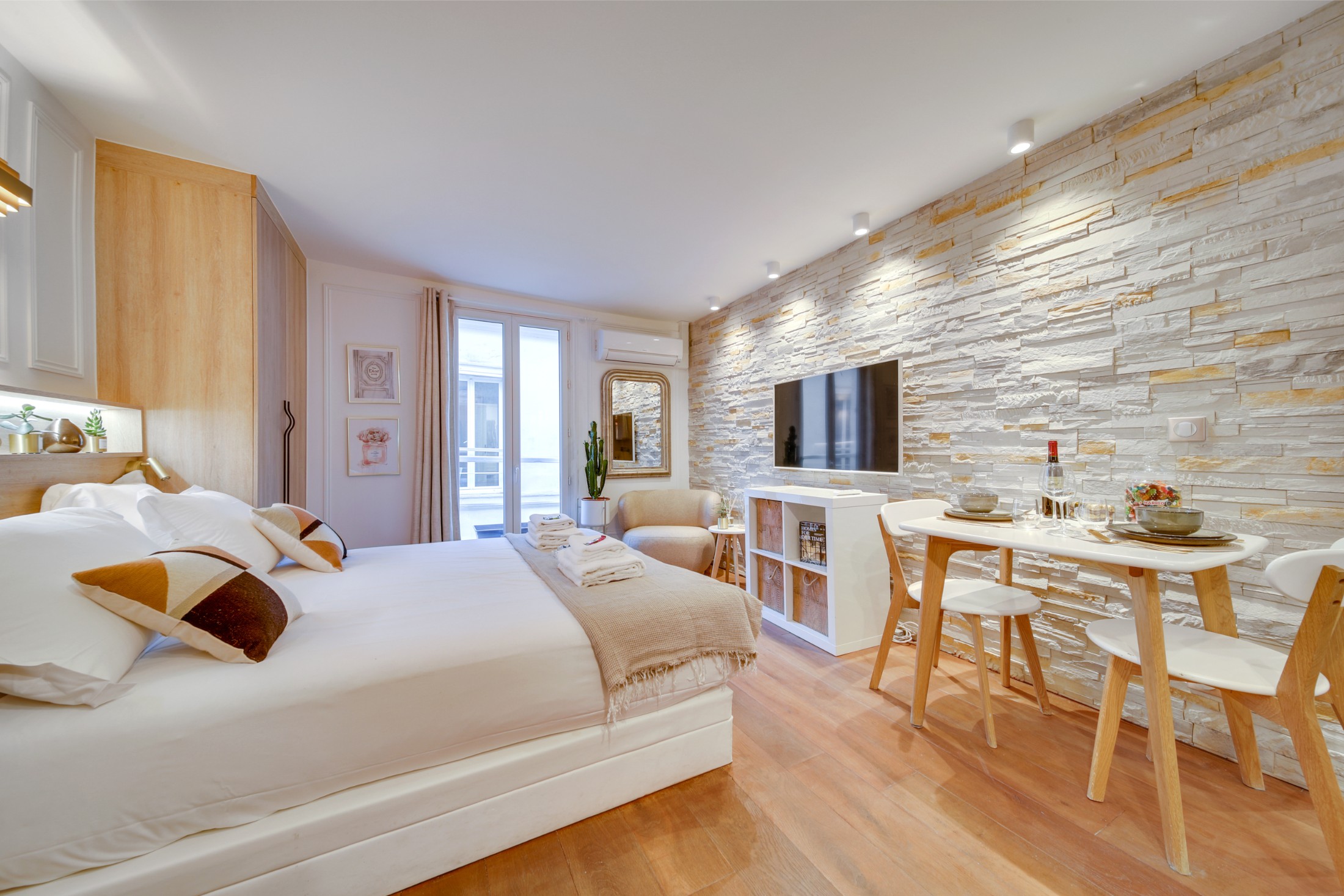
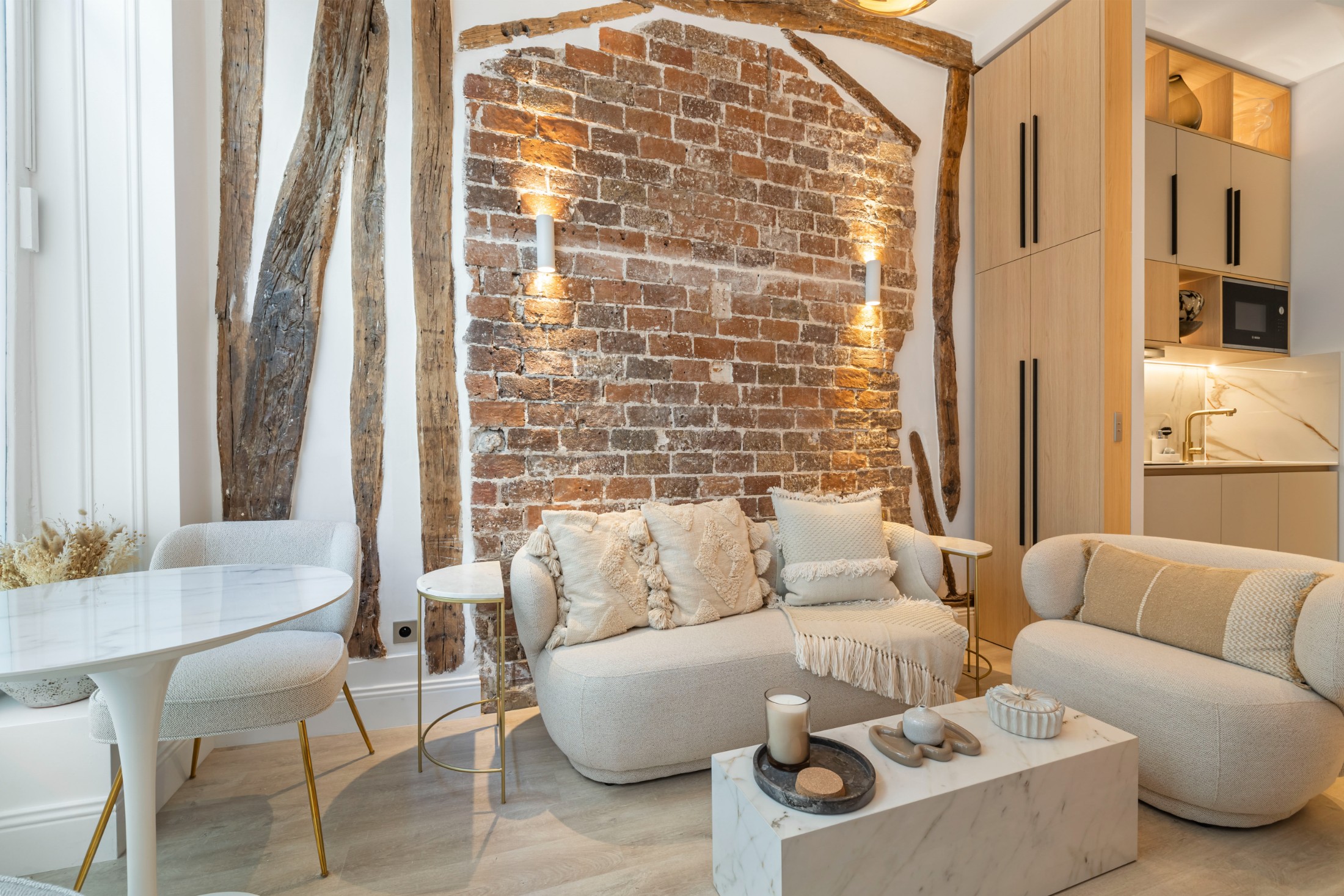
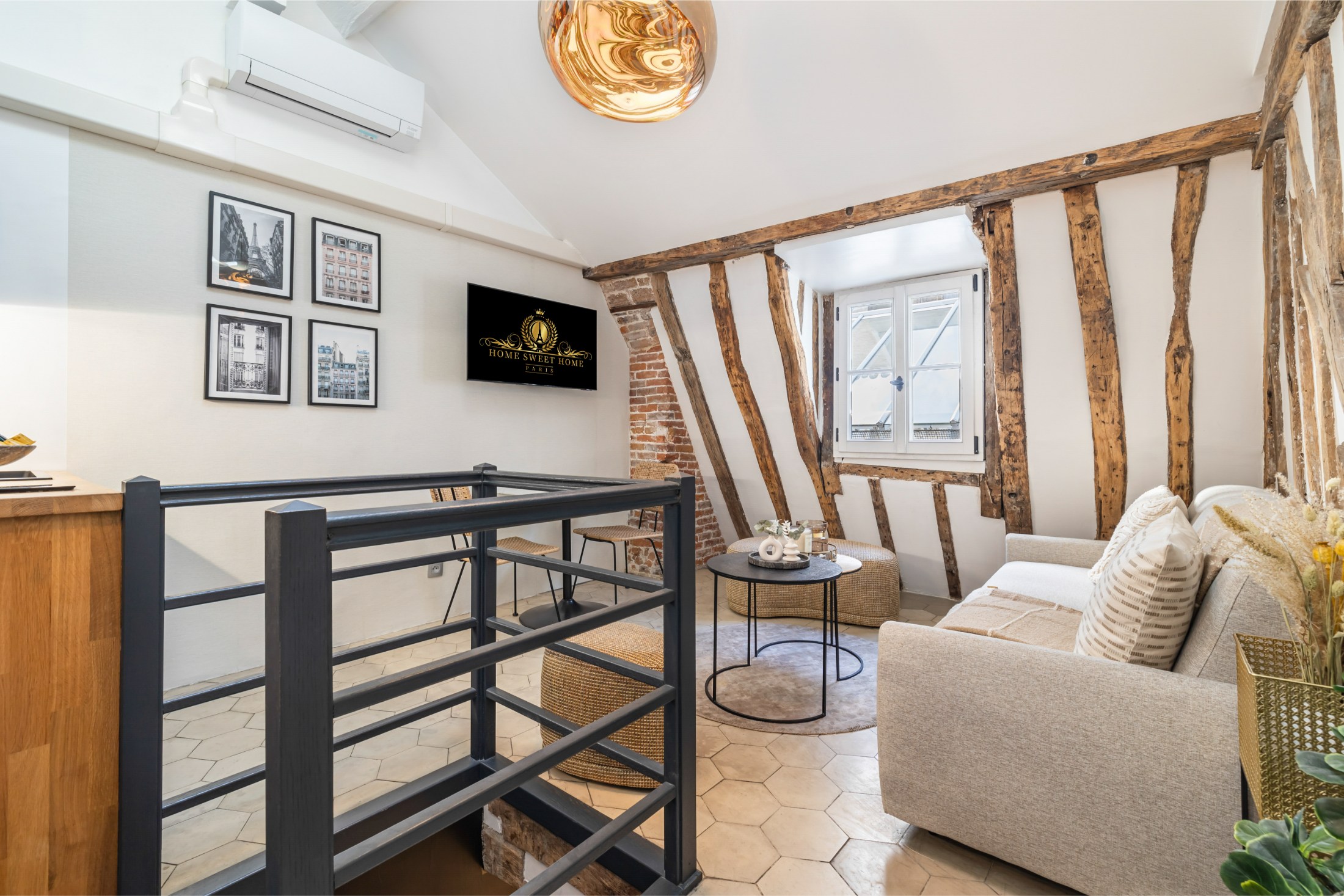
The choice of accommodation largely determines the quality of an exploration of this kind. Paris Luxury Stay offers eight luxury furnished apartments at Passage Choiseul, combining listed heritage with contemporary design, along with hotel services designed for a stress-free stay. The bespoke concierge service, available for reservations, recommendations, or private transfers, makes it possible to organize your days without logistical constraints, focusing on what matters most: discovering the neighborhood.

From this location, Place Vendôme, the major galleries, restaurants, and boutiques are all within walking distance, providing a comfortable base from which to explore the Marais and its more confidential addresses. To plan a stay balanced between exploration and relaxation, it may be useful to consult the advice offered in how to organize a high-end weekend in Paris without rushing.
Frequently asked questions
What is the best time to discover the hidden gems on Rue de Bretagne?
Choosing a weekday morning helps avoid weekend crowds and enjoy the neighborhood’s true rhythm, particularly at the covered market. Designers and artisans are also more available to chat outside peak hours.
Is Rue de Bretagne really part of the Marais?
Since the Marais has no official geographical boundaries, rue de Bretagne, located in the 3rd arrondissement, is generally considered one of its characteristic thoroughfares. It shares the historic atmosphere and network of small independent boutiques found throughout the rest of the neighborhood.
Do you need to book to visit the art galleries in this area?
Most of the neighborhood’s small contemporary art galleries welcome visitors freely during opening hours, with no reservation required. However, it is still advisable to check opening days in advance, as they may vary depending on the exhibitions.
Can you combine a visit to rue de Bretagne with other places in the Marais in a single day?
Yes, the proximity of the adjacent lanes and nearby heritage sites makes it possible to plan a full day on foot, alternating between the market, craft boutiques, and gourmet breaks. However, it is preferable not to overload the itinerary so as to preserve enough time for genuine wandering.
Are the designer boutiques on rue de Bretagne open year-round?
Most independent shops operate year-round, although some workshops may occasionally close depending on the season or the artisan’s availability. It is therefore wise not to focus your visit solely on one specific address, but to explore several options.
Where to stay to easily explore rue de Bretagne and the Marais?
Accommodation located in a central area of Paris, with good walking access to the historic neighborhoods, greatly facilitates this type of exploration. This is notably the case with the Paris Luxury Stay apartments at Passage Choiseul, designed to make it easy to reach Le Marais while benefiting from personalized assistance during your stay.