Carriage gates in the 3rd arrondissement: this phrase alone sums up all the discreet charm of the Marais. Behind these imposing carved wooden doors, often hidden between two anonymous façades, lie cobbled courtyards, spiral staircases, and private mansions that tell three centuries of Parisian history. Strolling through the 3rd arrondissement means being willing to look up and gaze through these massive gates that separate the noisy street from the hushed intimacy of aristocratic residences.
An iconic architectural heritage of the Marais
The 3rd arrondissement is home to one of the capital’s finest collections of carriage gates. Dating from the 17th and 18th centuries, these large openings once allowed carriages to enter directly into the inner courtyards of private mansions. Even today, they often survive miraculously preserved, providing precious testimony to the urban planning and aristocratic way of life that shaped this neighborhood. Each gate tells a different story: that of a noble family, a merchant enriched by trade, or an architect eager to leave his mark on his era with particularly daring carved decoration.
What immediately stands out is the diversity of styles. Some doors display a thoroughly classical sobriety, with fluted pilasters and a triangular pediment, while others are adorned with grimacing mascarons, carved garlands of flowers, or remarkably delicate ironwork. This variety reflects the evolution of Parisian architectural taste, from the Grand Siècle to the beginnings of the 19th century.
Rue des Archives and Rue Vieille-du-Temple: a concentrated dose of history
It is impossible to discuss the Marais’s carriage gates without lingering for a while on Rue des Archives. The Hôtel de Guénégaud, now the Museum of Hunting and Nature, has a monumental gate framed by rustic rustication that immediately conveys the grandeur of the building it protects. A little farther on, the Hôtel de Clisson, of which only the Gothic gateway remains, offers a striking contrast with the surrounding classical buildings: its crenellated turrets recall that before becoming aristocratic, the Marais was a fortified medieval neighborhood.
Rue Vieille-du-Temple is not to be outdone. There, you can discover porches with studded doors, sometimes adorned with bronze knockers patinated by time—remnants of an era when every detail of a door indicated the owner’s social rank. Some of these doors still retain their original hardware, a rare privilege in a city where successive renovations have often erased such details.
Unseen inner courtyards
The beauty of these carriage gates also lies in what they reveal when they are open. Many courtyards in the 3rd arrondissement contain ancient paving stones, disused wells, exterior wrought-iron staircases, or secondary façades that are every bit as impressive as the main street façades. Sometimes all it takes is a door left ajar to glimpse a fragment of vanished Paris—the Paris of 17th-century private mansions that remain intact.
The calm found again behind the great gates
What strikes the attentive passerby is the acoustic contrast between the street and the inner courtyard once the carriage gate has been crossed. These thick wooden and stone structures also served an obvious functional purpose: insulating residences from the urban din. Why peace and quiet is a true luxury in the heart of the capital takes on its full meaning when one understands that this architecture was designed, from the outset, to offer a peaceful refuge within the city itself. The private mansions of the Marais embody this long-standing quest for serenity that people still seek today when staying in this historic neighborhood.
Discover our apartments in the historic heart of Paris
Understanding this heritage through the neighborhood’s museums
To fully grasp the historical significance of these carriage gates, nothing compares to a visit to the Carnavalet Museum, the city’s true memory. The Carnavalet Museum to understand the history of Paris offers entire collections devoted to the evolution of Parisian housing, with models, plans, and original architectural elements from private mansions that have since disappeared. There, one can appreciate that the carriage gate was not merely a decorative feature, but an essential social and functional marker in the organization of the city under the Ancien Régime.
A few streets away, the Hôtel Salé houses another must-see institution. The Picasso Museum for a first visit to the neighborhood makes it possible to combine artistic admiration with architectural discovery, since the building itself, with its paved courtyard and imposing entrance gate, is one of the finest surviving examples of a private mansion in the Marais. The visit thus becomes twofold: viewing the works on display and discovering the architectural setting that houses them.
A Tailor-Made Stroll Through the 3rd Arrondissement
Architecture and Parisian history enthusiasts would do well to organize their exploration of the neighborhood methodically, combining built heritage with broader cultural experiences. An exceptional day among art galleries, boutiques, and gastronomy clearly illustrates how an architectural stroll can be punctuated by gourmet breaks and contemporary artistic discoveries, as the Marais is filled with galleries tucked precisely into these former courtyards of private mansions.
For visitors wishing to immerse themselves even further, certain offerings provide access to places that are usually closed to the public, or the benefit of being accompanied by guides specializing in the history of Parisian buildings. The best private experiences to book during a stay in Paris offer precisely this possibility, sometimes opening the doors to private courtyards that one can normally only imagine from the street.
Preserving these treasures in the face of urban pressures
Yet this exceptional heritage is not immune to threats. Careless renovations, replacement with unsuitable modern materials, or simple neglect: the historic carriage gates of the Marais are regularly monitored by Parisian heritage preservation associations. The SOS Paris Bulletin No. 63 also examines several emblematic cases of damage or disputed restorations affecting old architectural elements in the capital, reminding us how preserving these details, although essential to the neighborhood’s identity, requires constant attention from public authorities and local residents alike.

This issue of preserving small-scale heritage is not limited to Paris. In many French municipalities, local initiatives are mobilizing to document and protect remarkable architectural features, whether gates, façades, or old municipal buildings. The Commune – Ormoy (Haute-Saône) illustrates this approach to heritage enhancement at the village level, demonstrating that awareness of old buildings, far from being reserved for major cities, extends throughout France, from the alleyways of the Marais to the most discreet village squares.
A must-see detour for architecture enthusiasts
Beyond the hôtels particuliers that have become museums, many carriage entrances in the 3rd arrondissement remain private residences, invisible to the general public except during the European Heritage Days. Each year, this is a unique opportunity to enter courtyards that are usually inaccessible, touch century-old ironwork, and admire interior façades often better preserved than the street fronts, protected from bad weather and urban pollution.
Some routes suggested by local tourist offices also make it possible to spot, street by street, the most remarkable porticoes: Rue de Turenne, Rue des Quatre-Fils, and Rue Charlot each hold their share of architectural surprises. A simple notebook and a little patience are enough to create your own photographic collection of these giants of wood and stone.
Staying as close as possible to this exceptional heritage
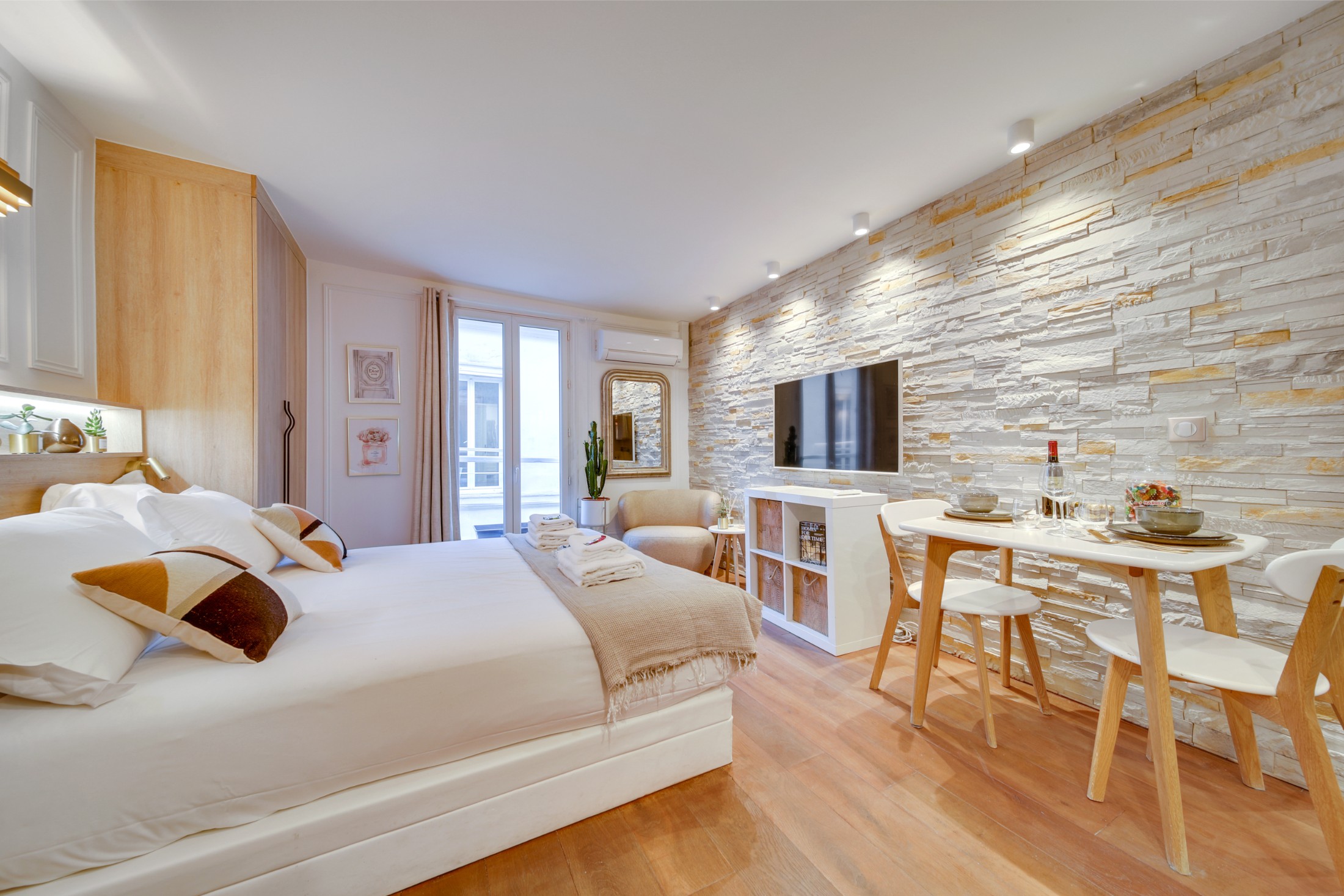
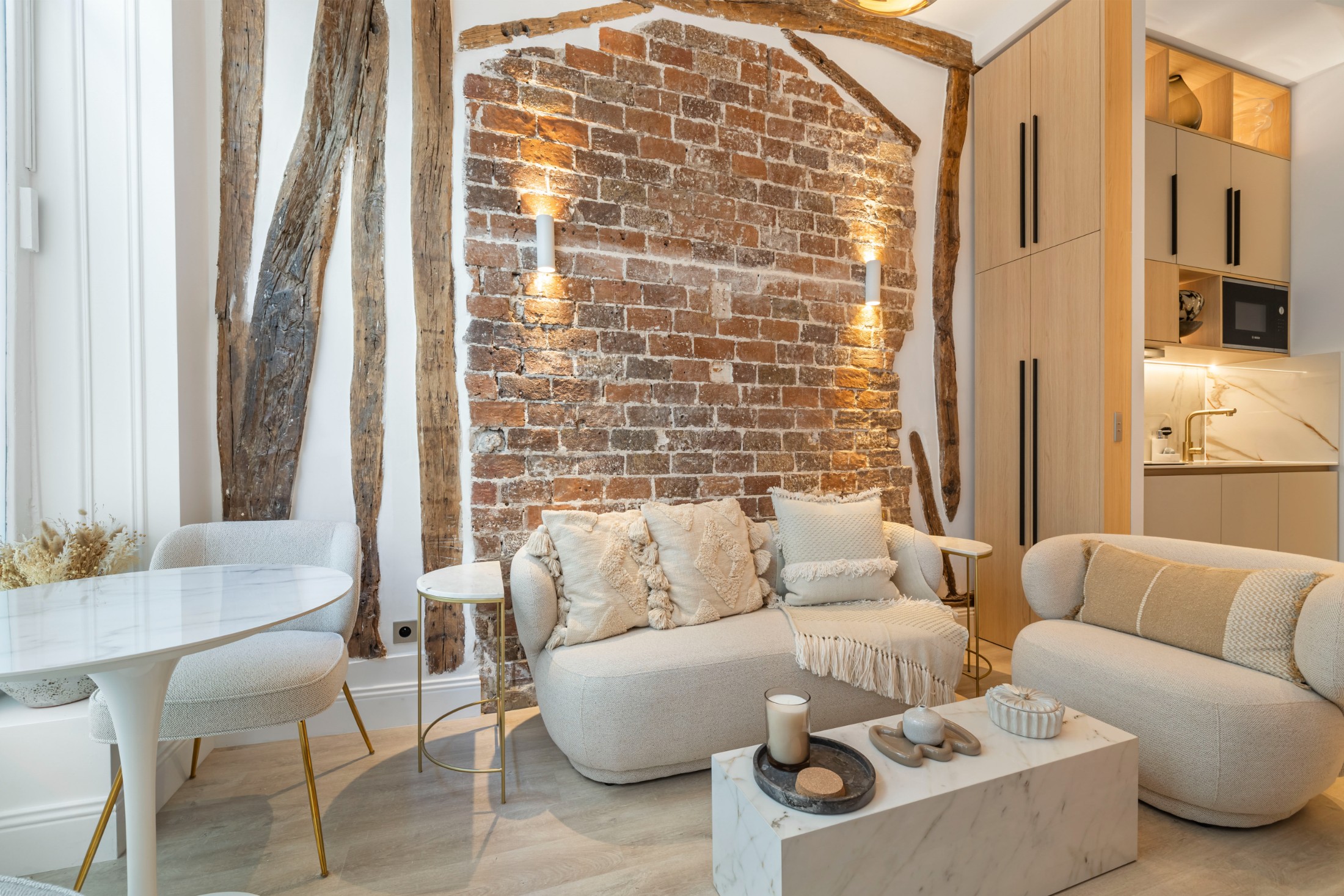
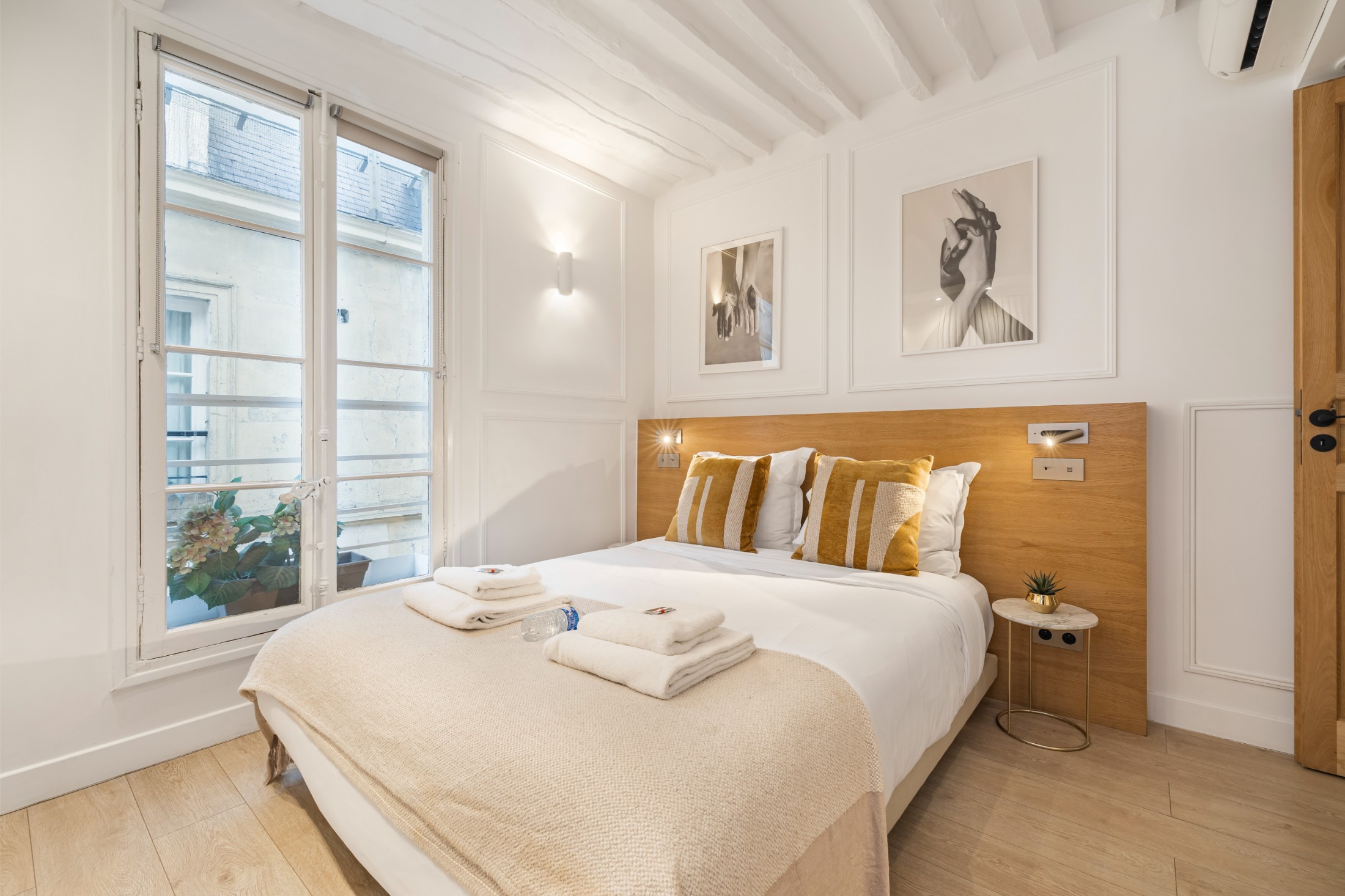
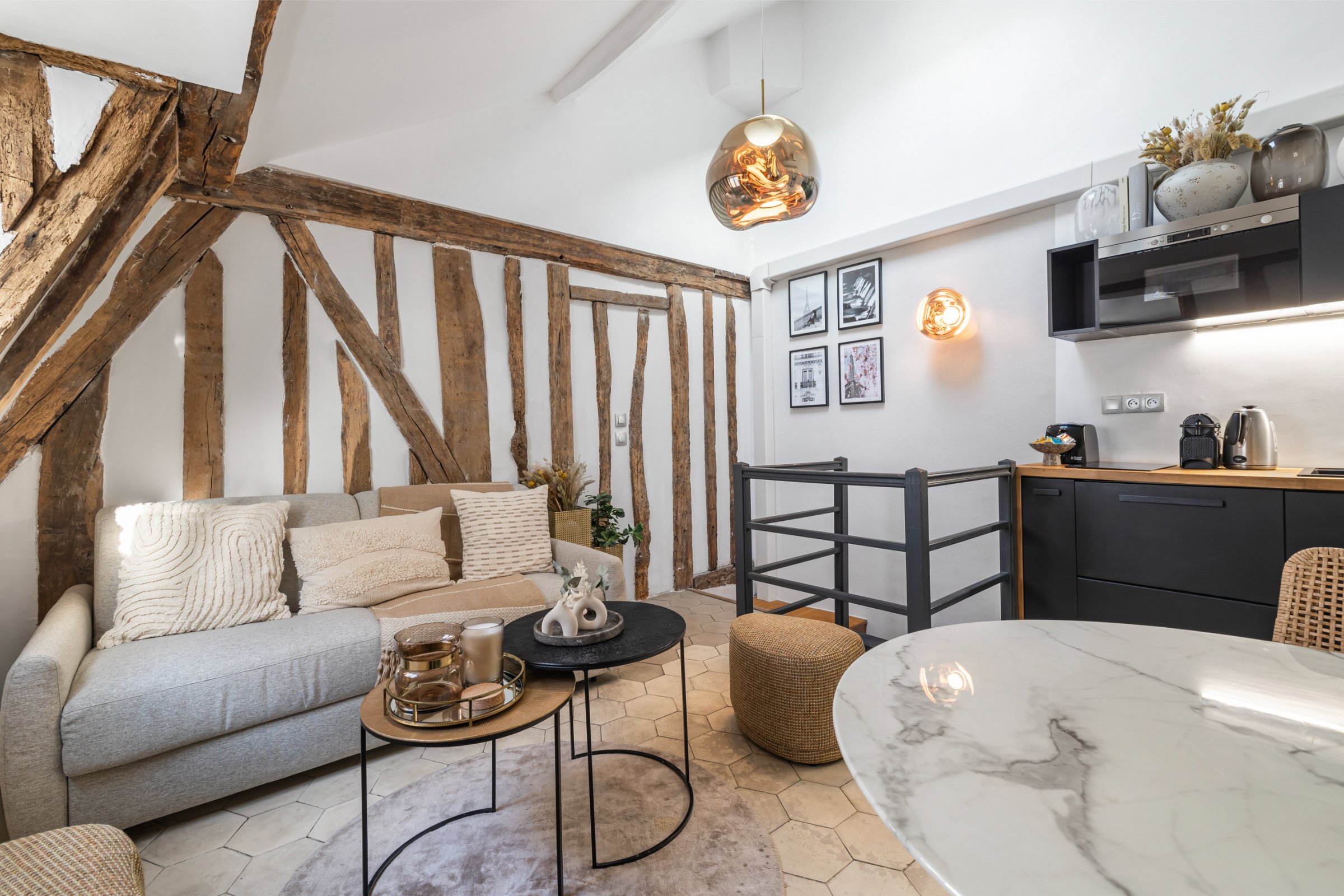
To make the most of this architectural wealth, nothing beats staying in the heart of the neighborhood, just steps from these centuries-old carriage entrances and the hôtels particuliers that have made the Marais famous. Discover our apartments in the historic heart of Paris and let yourself be carried along each morning by the promise of a new architectural discovery, just a few steps from your front door.
The 3rd arrondissement thus continues to offer, to those who know how to take the time to look up, a true open-air museum where each carriage entrance becomes the silent prologue to a Parisian story that is still alive, between stone, wood, and ironwork, at the crossroads of several centuries of the art of living.